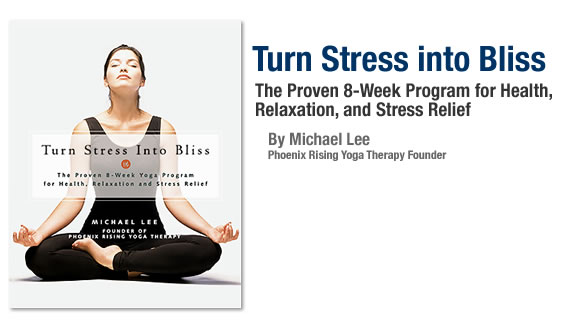
In my last blog post we talked about the “form” and the “essence” of yoga. This week I’ll share with you some key tips for easily tapping in to the essence of the practice. Following these tips will help you maximize the benefits and effectively use yoga as a tool for managing stress.
1. TIME AND PLACE – To get the most from my yoga practice I do it in the same place and at roughly the same time every morning. I make sure there is plenty of time available by getting up early enough to complete my hour long ritual each before anything else happens in my day. It does not have to be an hour. That’s just my preference. As little as 15 minutes can work as long as it happens daily and is a focused time.
2. WARM UP – I don’t start right away with trying to get deeply into the essence. Instead I spend a few minutes with vigorous movement and breath. You can just jump around if you want, or shake your body, do random movements or whatever just plain feels good to wake up your body and your breath. There is a section in “Turn Stress Into Bliss” that describes a warm up routine that I like to use.
3. BREATHING – Once you begin your yoga practice pay as much attention to your breath as you do to your body. Long, slow, deep, inhalations followed by relaxed full exhalations that are coordinated with you body movements work best.
4. PLAY THE EDGE – Remove all force, strain, and trying from your practice. Instead come gently to your edge in each posture using your breath to help you slowly get there. Some years ago I wrote an article on Playing The Edge that was published in Yoga Journal. If you are a yoga teacher and would like to copy it for your students, email me. It may help them add another dimension to their approach to yoga. I like to think of my yoga practice as “effortless effort”.
5. FOCUS AWARENESS – Once you arrive at your edge, practice being present physically and emotionally to whatever you might be experiencing right NOW.
6. ACCEPT – Whatever you notice, accept it. This is what is happening now and all that needs to happen.
7. CHOOSE - Decide in the moment how to be present to what is happening. You might feel an urge to move into a harder edge. Do you really want to do this? Choose. Practice making different choices and see what happens as a result.
8. PAUSE AND REFLECT – After each posture and again at the end of your practice take a few moments to reflect on your experience and what you noticed. In Phoenix Rising Yoga Therapy one key element of the process is what we call Integration. It’s one of the key features of the practice that help make it such an effective modality.
All of the above tips are described in detail in Turn Stress into Bliss. Another good way for new yoga students to learn how to work with yoga this way is to find a yoga teacher or yoga therapist who can teach and guide them with a private session.
If you find this blog post helpful, please email it to your friends, students, or colleagues by clicking on the little mail envelope below. Also if you have any comments or questions please use the comment link below. I love to hear from my readers.
Showing posts with label yoga and stress. Show all posts
Showing posts with label yoga and stress. Show all posts
Thursday, April 23, 2009


Thursday, April 9, 2009
Yoga and Stress
Just about everyone knows and believes that if you want to reduce stress you should take up yoga, right? Is yoga the new panacea? Will it really make a big difference? And what kind of yoga? And what about the millions of us who just don’t see ourselves on a yoga mat – ever! Are our concepts of yoga misguided or do we really not fit the mold?
There is no question that regular yoga practice will make a difference to one’s life and it really doesn’t matter what kind of yoga is practiced. For the majority this will usually be a physical approach to yoga and the benefits will in turn be primarily physical. They include better respiration, enhanced circulation, greater flexibility, and an overall feeling of physical well being. All of this will contribute to reducing stress. However, when the rubber hits the road in day to day life in areas where stress is likely to be triggered – at the office or at home – it just might not be enough to make much difference. Yes, you read that right! All the effort of getting to that yoga class and practicing diligently just might not prevent you from that angry outburst, that frustrated look, or that deep feeling of despair and helplessness.
Why not?
Well, for one thing you may not have paid sufficient attention to aspects of yoga that will make a difference. Let me tell a story about a yoga colleague I’ll call Vince although that was not his real name.
Vince began practicing yoga in his twenties and loved it. He worked hard at his asana practice and very soon became one of the most adept students in his class. Vince was also very short tempered and impatient but was seen as someone who was strong, and was always able to push through and make things happen. Nobody would ever describe Vince as a happy person. He had a stern look on his face and if you looked closely enough you could sense a person in emotional pain. Success was important to Vince. All of these attitudes came to the yoga mat with him. He gave himself two weeks to get his forehead to his toes in the sitting forward bend and got there with days to spare by pushing his body through the pain and practicing the posture for hours each day. He became a yoga teacher, and because of his incredible physical flexibility and prowess as a yogi in the physical arena, was featured in a prominent yoga magazine.
I met him on the conference circuit and over several years got to know him just a little. Interestingly, he had attracted a following of students who were in many ways just like him – driven to succeed and focused on attaining perfection with the physical form of yoga. Ten years after meeting Vince his conversation had not changed. He was still frustrated with many aspects of his life, still striving for perfection in all things, and still criticizing his students for not working hard enough.
To me there are two very important aspects to the practice of yoga – the “form” and the “essence”. Vince focused on the form almost exclusively and as a result missed most of the benefits that the essence of yoga might have brought to his life. Now I’m not saying that form is not important. It is! We do need to know how to work with our bodies as we practice yoga. But form is really only a tool, not an end in itself. As well as good form we also need to learn how to engage the practice of yoga in ways that take us to deeper levels of awareness at emotional, mental, and spiritual levels. If we are obsessed with the form of the practice, this is unlikely to happen.
So how do we do that? Check back here in a few days for the next blog post and I’ll share some tips with you. And the good news is that if you don’t get hung up on the form that yoga should take, you, or practically anyone you know, can engage the practice and use it as an effective stress management tool. You don’t need a body like Vince’s!
Sunday, March 8, 2009
STRESS and FEAR
Fear of something, no matter what it is, can be a source of stress. And it's often very different for each of us. For a teenage girl I worked with this week, it was fear of flying. For my wife, it's fear of supermarkets. How do we deal with these so called "little fears"?
It's been said that we shouldn't sweat the petty stuff, but that's easier said than done. There are various approaches ranging from "embracing the beast" to "turning and running".
This week I had the pleasure of leading an Introduction to Aviation Week for ten students from a nearby private high school. Flying is one of my passions and so it was a great chance for me to give back something I've gained from my 20 or so years of flying airplanes. On the first day I asked them why they had chosen this particular option as part of their Pro Vita (for life) program. The responses were varied and many talked about the adventure and excitement that went with taking to the air. For Victoria though it was very different. She said she was afraid of flying. Terrified, in fact. She talked about the physical reactions in her body every time she set foot on a plane to go anywhere. She had decided that by learning more about airplanes and even getting to fly one, could be one way she would overcome it.
On the first day we went flying. The weather was not the best and it was pretty bumpy aloft. Victoria let out a scream or two as the airplane bounced around. I began to wonder if this "self therapy" she had prescribed for herself might not work out. By the third day she was much more relaxed and was beginning to enjoy the experience. By the last day of the program she was ecstatic as she took the controls and actually flew the airplane herself. In her evaluation she wrote: "Taking this course has taught me not to be afraid anymore. Because I faced my fear and allowed myself to embrace the rawest form of flying I will probably experience, I am no longer worried!" Victoria had truly "embraced the beast and tamed it".
Lori really hates supermarkets and when in one for any length of time beyond a few minutes, she experiences stress related symptoms. She feels nauseous, light headed, and unstable on her legs. If she pushes through these symptoms, she then gets a headache and by the time she gets to the checkout she's often feeling like throwing up. For many years she's tried to overcome it by "just doing it anyway". As a small child from a large family, she went several times a week to the several different supermarkets with her mother for prolonged shopping experiences armed with coupons and lists. She hated it. She felt very small inside the big store and the array of stuff on the shelves was overwhelming. The fear of not getting the best bargain was ever present and the high powered fluorescent lights tended to make her feel sick in the stomach. Every time she left a store, she inwardly wished it might be the last time she'd ever have to go into one. On the other hand, I love supermarkets. I read labels and spend additional time seeking out new products to try. I enjoy looking for the bargains, chat with the guy at the seafood counter, talk to people I meet, and generally come away feeling pleased with the experience. So in our family it's a no-brainer. I do most of the grocery shopping each week and have done for years. One of the most loving things I can do for my wife is to reassure her that she doesn't have to step foot in a supermarket again if she doesn't want to. This "stay away from the damned tiger at all costs" strategy works just fine for her.
This weekend we changed the clocks forward one hour for the return to daylight saving time. I couldn't help but notice how I chose to "hug the tiger" on Saturday night. Before going to bed I made sure all the clocks were changed, remembering how in years past when waiting until the next day to change some of the clocks and forgetting to change others, I had managed to create some panic next day around us knowing what time it really was. For me, I find that when I notice the urge to procrastinate and then consciously choose not to, it makes for a less stressful time ahead.
In these examples I have outlined above there are three common elements. They are: Awareness, Choice, and Action. If you want to know more about these in more detail there is a chapter on each in my book Turn Stress Into Bliss. To shortcut though, you can ask yourself these questions: "What are the little fears (tigers) in my life?" "What are my choices with each?" "What action do I want to take?"
So what DO you do with your "tigers" in life? What works and what doesn't?
Please pass this blog on to others if you feel it might serve them. Cheers for now.
Friday, February 13, 2009
THE STRESS OF PARENTING
"When you think about it, being a parent is very much like a 90 minute strenuous yoga routine, only expanded into 20 years or more. You come up against all kinds of edges, find numerous opportunities to find out how to be present to what is happening, and find out a lot about yourself in the process. ….
... Parenting in the 21st century is also very different from any other time in history. Only 50 years or so ago, we could almost predict that things would not change a lot from one generation to another. Not so now. Children of today, by the time they become teenagers, are probably much more adept at accessing information about anything, than both parents combined. Old systems of control used for generations of parenting, no longer apply. How can you control someone who has more information about everything than you do? It's a set up for failure.
Instead, parents must learn how to be enrollers and know how to inspire their offspring into playing a game of life that works and offers results worth achieving. "
THE ABOVE EXCERPT is taken from the Chapter on Parenting in my first book Phoenix Rising Yoga Therapy: Bridge from Body Soul published in 1997. As I read it I realize that what I wrote about then, is not only still relevant some 12 years later, but is even more ( and sometimes painfully) true. In reading further I also realize that the suggestion I made then around how to deal with the many issues faced by modern parents, also still applies. Here's the essence of what I suggested then.
"…it's not so much what I do as a parent that matters as much as how I be. " p.161
And the good news is that I really do have some control over how I "be" and how I show up in my day to day relationships. For me, I don't talk to a single person in the morning until I've done at least 10 to 15 minutes of moving my body, breathing, and centering myself. I know from years of experience that this one simple thing makes a huge difference in how I show up. I also know I need to focus my mind and put my best foot forward. If I don't, that same foot will probably end up in my mouth before breakfast is over.
To me, part of getting centered as a parent, means bringing to focus all the love I feel for each member of my family. It only takes a few minutes and can even be done while washing face, combing hair or brushing teeth. I simply make a mental picture of each member of the household, and in my mind's eye, "pour out the love" to each in turn. It sounds simple and it is… but it's also very powerful. How do you prepare yourself on the inside for a day of parenting? Try my approach if you want, or create your own. But remember, parenting is a job that not only needs all the everyday skills you can muster, it also needs some inner preparation and focus if you hope to avoid or deal with much of the stress involved.
It's hard to believe that first book I wrote Phoenix Rising Yoga Therapy: Bridge from Body Soul is still in print and still selling. If you want your copy you can get it at TheYogaShop.com
A big welcome to all my new subscribers who joined this week. If you like what you read, please do me and your friends a favor and forward this blog to them. I promise it won't take long to read, there's no hard selling, and each post will contain at least one simple thing that could make a difference to your life. My primary purpose in writing here, is to share with you some of the things (mostly processes), that I've learned so far in my life, that really do work.
Wednesday, January 21, 2009
Your 15 Minute Stress Buster
OK, as I promised in my last blog post here is a simple fifteen minute routine for you. But first the disclaimer. This is what I consider for myself as the "bare minimum" to maintain the balance I need on a daily basis to handle the stress in my life. So I use this kind of routine as my emergency maintenance routine. It comes in handy when I'm on the road or like this morning when I had to get up and drive my teenage son to the airport at 4.30am and don't have time for a more complete practice. I find the best time for this routine is immediately after I get out of bed in the morning.
What you will see below is several segments of the routine with some suggestions as to what to put into that time. The choice of exactly what you do is up to you. There are several options for each segment listed in my book in various places, particularly in the complete yoga and meditation routine sections.
This routine is based on these ideas. First and foremost is the idea that it is good to get our blood flowing and air moving in and out of our lungs. Secondly, as our spine is the main energy conduit of our bodies, we can get all systems working better if we move the spine in all possible directions. Although these kind of activities (getting blood and breath moving and stretching in all directions) have a positive physical benefit, we can get double the benefit if we perform them with the utmost level of awareness and self-attunement. Detailed ways to master these aspects are also included in the book "Turn Stress into Bliss". Finally, there is the idea that we are in a better position to handle our daily lives in a more calmly focused way, if we set an intention to do so. So given all that here goes!
Michael Lee's 15 Minute Daily Stress Handling Maintenance Routine
Minutes 0 to 5: Jump around! Any way you like. The purpose is to get blood flowing and breath moving. You can do jumping jacks, you can make your arms into propellers, you can dance wildly, do scissor kicks in the air, or whatever. Being more of a yoga nut, I do squats with loud and deep breathing, I do a forward hang and shake my head while making the ugliest face I can muster, I open my mouth as wide as it will go and let out a roar like a lion and shake my body like a rag doll being severely mishandled by a rambunctious three year old. The aim is to move as many different parts of your body as vigorously as you can while breathing deeply and having fun. By the end of 4 minutes you should be starting to feel a little tired from all the movement. When this happens it's time to stand still and take slow deep full breaths in, and let them out with a "Hahhhhhhhhh" sound. (Falling out breath which is described in more detail in my book.) The conscious awareness part of this exercise is to observe yourself as you go. What do you notice? Sometimes I notice myself censoring my movements. Sometimes I notice that I am more or less vigorously than usual. Sometimes I notice myself trying to answer the question "why?" about whatever I'm noticing. What I like to do is let go of any judgments of myself regardless of what I notice myself thinking. I just say to myself "So what!" and come back to the exercise.
Minutes 6 to 10: Moving the spine in all directions. Backbend, forward bend, side bends, and twists in both directions. Do one or two of each and hold for two or three deep breaths at the edge with a pause for two or three deep breaths between each. Most any yoga book or my book "Turn Stress into Bliss" will give you detailed directions for these if you need them. Beginners tend to hold the positions for less time and do two repetitions. I prefer to do just one of each posture and hold for a little longer making sure to breathe fully and deeply in the holding position and when entering and leaving the posture. Again, practice with awareness. Observe yourself and use your observations to try non-judgment and detachment. (Both great stress handling tools that you can take with you into your daily life)
Minutes 11 to 15: Meditate. Sit comfortably, breathe gently and become the witness. As I don't find meditation all that easy I use a simple mantra. It is "I watch myself breath in, I watch myself breathe out" and repeat that over and over. If you are worried about time, set a timer. I don't worry about it if I go a minute or two more or less and can judge five minutes pretty easily once I do it a few times. Again, be the witness to your whole state of being as you sit and meditate At the end of your meditation there is one last thing to do. Set your intention for the day. "Today, I see myself going about my day………..(describe)". Make it positive rather than negative. For example: "I see myself going about my day with calmness and serenity" rather than "I see myself not getting into any fights today." Also don't forget to give yourself your absolute permission to not be perfect. Make room for not being 100% with whatever you might want to create in your day. Remember there is always tomorrow and Rome wasn't built in a day.
There you have it. Be inspired and do good things for yourself every day. And if you like what you read in this blog, please do me and your friends a favor by sending them the link.
Monday, January 5, 2009
A 2009 WITHOUT STRESS - A GIFT FOR YOU
Wouldn't that be nice? No more raised voices, no more anxiety at work, days full of joy and happiness, no more money worries, and lots of time to do the things you love.
Is a life without stress possible? Can we live out our days without all the tension?
How great it would be to have some magic bullet (legal of course) that would let us reach this state. Does it exist?
Well the answer is 'probably not'. So then why bother trying? Well, I do believe we can make a significant difference. Sure, there is no magic bullet. Sure, there will always be some tension in life. In fact we probably couldn't live very well without a little tension now and again. But the kind of stress that slowly kills us, creates disease, destroys our relationships, makes each day a misery, creates headaches and aches and pains in our body – that kind of stress we can do without and we can go a long way towards eliminating from our lives.
And there is a magic bullet for this. Well kind of. It comes in the form of a gift we can give to ourselves each day and any one can do it.
It is the gift of time. Yes, time. In order to effectively manage stress in our lives requires us to take the very first step and give ourselves the gift of time.
How much time? Well that depends on how much you can afford on the one hand, and how committed you are to changing the way you manage the stress in your life. Like all gifts, it would suck if you gave yourself an hour a day and then took it away a few days later because you couldn't afford it. So be realistic. How much time can you afford to give yourself each day that you will not take back under any circumstances?
If I were really stressed out, I might be motivated enough to give myself an hour a day for a period of time.
That's what is asked of you if you take the self directed program "Turn Stress into Bliss" that is outlined in my book bearing that title and which you can buy right here from this blog. That program has been proven to work for most people most of the time. In just eight weeks you could go from pain to no pain if its stress related. You could also go from stressed out to blissed out if you follow the program all the way.
But an hour a day! That's a lot to give for some of us. So if you can't do that hour, how about just 15 minutes? Can you afford that? And if you gave yourself 15 minutes a day, how would you use it?
As my New Year's Gift to you, in my very next blog post I will outline a simple 15 minute body-mind routine for you.
So stay tuned, and in the meantime think about when you are going to receive this gift. For me and most people the very best time is first thing in the morning after we get out of bed. But choose a different time if it works better for you - as long as you get that full gift each day uninterrupted. That might mean turning the clock forward 15 minutes or using some other trick to make sure you get it.
Think about it. You make the time, and I'll give you the recipe.
Is a life without stress possible? Can we live out our days without all the tension?
How great it would be to have some magic bullet (legal of course) that would let us reach this state. Does it exist?
Well the answer is 'probably not'. So then why bother trying? Well, I do believe we can make a significant difference. Sure, there is no magic bullet. Sure, there will always be some tension in life. In fact we probably couldn't live very well without a little tension now and again. But the kind of stress that slowly kills us, creates disease, destroys our relationships, makes each day a misery, creates headaches and aches and pains in our body – that kind of stress we can do without and we can go a long way towards eliminating from our lives.
And there is a magic bullet for this. Well kind of. It comes in the form of a gift we can give to ourselves each day and any one can do it.
It is the gift of time. Yes, time. In order to effectively manage stress in our lives requires us to take the very first step and give ourselves the gift of time.
How much time? Well that depends on how much you can afford on the one hand, and how committed you are to changing the way you manage the stress in your life. Like all gifts, it would suck if you gave yourself an hour a day and then took it away a few days later because you couldn't afford it. So be realistic. How much time can you afford to give yourself each day that you will not take back under any circumstances?
If I were really stressed out, I might be motivated enough to give myself an hour a day for a period of time.
That's what is asked of you if you take the self directed program "Turn Stress into Bliss" that is outlined in my book bearing that title and which you can buy right here from this blog. That program has been proven to work for most people most of the time. In just eight weeks you could go from pain to no pain if its stress related. You could also go from stressed out to blissed out if you follow the program all the way.
But an hour a day! That's a lot to give for some of us. So if you can't do that hour, how about just 15 minutes? Can you afford that? And if you gave yourself 15 minutes a day, how would you use it?
As my New Year's Gift to you, in my very next blog post I will outline a simple 15 minute body-mind routine for you.
So stay tuned, and in the meantime think about when you are going to receive this gift. For me and most people the very best time is first thing in the morning after we get out of bed. But choose a different time if it works better for you - as long as you get that full gift each day uninterrupted. That might mean turning the clock forward 15 minutes or using some other trick to make sure you get it.
Think about it. You make the time, and I'll give you the recipe.
Saturday, December 20, 2008
When you Fall over the Edge
Despite our best intentions around the Holidays (see last week’s blog post), we are going to inevitably fall short of manifesting what we might intend. Example: You are committed to creating serene and peaceful home environment during the holidays, but one morning for no “apparent” reason, you find yourself yelling at one of your children. The serenity disappears, hurt frowns appear on faces, everyone feels a little jarred into another reality, and you feel awful for creating such a mess with just a few harsh words. What do you do?
Well it’s kind of like spilling milk on the floor. You can’t magically get it back in the container. You just have to clean it up and let go of it. You could dwell on it for the rest of the day but would that really serve you or anyone else? Probably not! So if you find yourself in this situation here’s a simple strategy for letting go and moving on.
First, be aware of what happened and what you did so you can make a few simple sentences to accurately describe the event. Example: I was frustrated trying to get breakfast for everyone and John refused to respond to my request for him to empty the dishwasher. I got angry and yelled at him.
Next, accept that you got angry. It might not be the part of you that you like the most, but it does happen. There is nothing wrong with anger either. It’s a legitimate feeling. On the other hand you do have a choice around how you express it and perhaps yelling at someone you love is not your most preferred choice. You can make a simple statement to explain this. Example: “John, I’m sorry I yelled at you. I was angry that you didn’t respond when I asked and I could have just talked to you rather than yelling. Please accept my apology for the way I handled my anger.” (Notice you are not apologizing for being angry but for the WAY YOU HANDLED your anger.)
Finally, reaffirm and express to others your intention. Example: “I’d like us to create a peaceful and loving household this Christmas and the way I just spoke to John didn’t help. I’d like to get back on track with my intention and could use your forgiveness and support. Thanks.”
Remember, we didn’t learn to ride a bicycle by never falling off and even when we’ve mastered it we can still have the odd skid and crash. When you fall, just get up, dust off, and climb right back on – hopefully with a smile. Have fun and enjoy the Holidays.
Well it’s kind of like spilling milk on the floor. You can’t magically get it back in the container. You just have to clean it up and let go of it. You could dwell on it for the rest of the day but would that really serve you or anyone else? Probably not! So if you find yourself in this situation here’s a simple strategy for letting go and moving on.
First, be aware of what happened and what you did so you can make a few simple sentences to accurately describe the event. Example: I was frustrated trying to get breakfast for everyone and John refused to respond to my request for him to empty the dishwasher. I got angry and yelled at him.
Next, accept that you got angry. It might not be the part of you that you like the most, but it does happen. There is nothing wrong with anger either. It’s a legitimate feeling. On the other hand you do have a choice around how you express it and perhaps yelling at someone you love is not your most preferred choice. You can make a simple statement to explain this. Example: “John, I’m sorry I yelled at you. I was angry that you didn’t respond when I asked and I could have just talked to you rather than yelling. Please accept my apology for the way I handled my anger.” (Notice you are not apologizing for being angry but for the WAY YOU HANDLED your anger.)
Finally, reaffirm and express to others your intention. Example: “I’d like us to create a peaceful and loving household this Christmas and the way I just spoke to John didn’t help. I’d like to get back on track with my intention and could use your forgiveness and support. Thanks.”
Remember, we didn’t learn to ride a bicycle by never falling off and even when we’ve mastered it we can still have the odd skid and crash. When you fall, just get up, dust off, and climb right back on – hopefully with a smile. Have fun and enjoy the Holidays.
Thursday, December 4, 2008
MINIMIZE STRESS DURING THE HOLIDAYS
Most people, if asked, will generally tell you that holidays are a stressful time. We also often hold memories of great family gatherings, wonderful food, gifts, and togetherness when we think of holidays in years gone by.
What then, makes holiday time so stressful?
I believe it’s because we spend a lot of time DOING and only a little time BEING. The “being” part of the holidays usually happens when we are sitting around a fire, sipping hot chocolate, chatting with family or friends, and generally just hanging out and “being” together. The “doing” part involves all the lead up to the holidays – shopping for gifts, preparing food, welcoming visitors and so on.
So the key to reducing holiday stress is to maximize the “being” and minimize the “doing”.
This will require both management and awareness if you want to pull it off. First become aware of all the “doing” things around holiday time that create stress for you. Make a list. Then take each item in turn and decide how you can make each item less stressful. How can you minimize the “doing” for each item?
Here is an example. Our family recently gave up the idea of everyone buying gifts for everyone else. Instead we ALL buy a just one gift for each person. One person is assigned the task of gathering information from others on a particular family member and then going and purchasing just one gift for that person with all other family members contributing. We were surprised to find that some wonderful things happened from using this gift giving strategy. Firstly, a lot of thought went into each gift. In fact the whole family spent time “being” with each other in our thoughts, as opposed to each of us racing around numerous stores spending many frustrating hours trying to decide what to buy for each person. The plan also gave us more time to focus on other aspects of the holidays. Two family members were assigned the task of creating a Christmas Day ritual to precede the gift giving. More focus was placed on the part of the holidays that involved our “being” together and less on all the doing beforehand. Now, don’t think you have to follow our lead here and do the same in your family unless it is something you feel fits for you and yours. We each need to arrive out our very own solutions for maximizing the “being” and minimizing the “doing”. What do you think you could do that would work for you and your family?
Next week I’ll talk some more about other ways to help reduce Holiday Stress.
Subscribe to:
Posts (Atom)


 Posts
Posts

