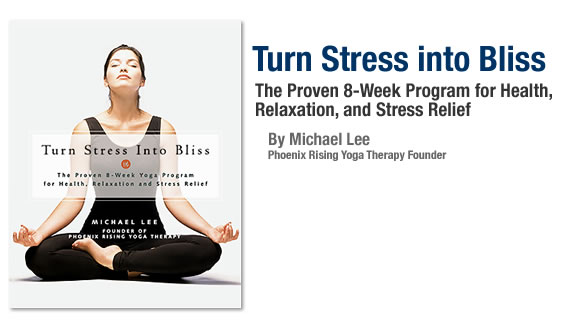
In my last blog post we talked about the “form” and the “essence” of yoga. This week I’ll share with you some key tips for easily tapping in to the essence of the practice. Following these tips will help you maximize the benefits and effectively use yoga as a tool for managing stress.
1. TIME AND PLACE – To get the most from my yoga practice I do it in the same place and at roughly the same time every morning. I make sure there is plenty of time available by getting up early enough to complete my hour long ritual each before anything else happens in my day. It does not have to be an hour. That’s just my preference. As little as 15 minutes can work as long as it happens daily and is a focused time.
2. WARM UP – I don’t start right away with trying to get deeply into the essence. Instead I spend a few minutes with vigorous movement and breath. You can just jump around if you want, or shake your body, do random movements or whatever just plain feels good to wake up your body and your breath. There is a section in “Turn Stress Into Bliss” that describes a warm up routine that I like to use.
3. BREATHING – Once you begin your yoga practice pay as much attention to your breath as you do to your body. Long, slow, deep, inhalations followed by relaxed full exhalations that are coordinated with you body movements work best.
4. PLAY THE EDGE – Remove all force, strain, and trying from your practice. Instead come gently to your edge in each posture using your breath to help you slowly get there. Some years ago I wrote an article on Playing The Edge that was published in Yoga Journal. If you are a yoga teacher and would like to copy it for your students, email me. It may help them add another dimension to their approach to yoga. I like to think of my yoga practice as “effortless effort”.
5. FOCUS AWARENESS – Once you arrive at your edge, practice being present physically and emotionally to whatever you might be experiencing right NOW.
6. ACCEPT – Whatever you notice, accept it. This is what is happening now and all that needs to happen.
7. CHOOSE - Decide in the moment how to be present to what is happening. You might feel an urge to move into a harder edge. Do you really want to do this? Choose. Practice making different choices and see what happens as a result.
8. PAUSE AND REFLECT – After each posture and again at the end of your practice take a few moments to reflect on your experience and what you noticed. In Phoenix Rising Yoga Therapy one key element of the process is what we call Integration. It’s one of the key features of the practice that help make it such an effective modality.
All of the above tips are described in detail in Turn Stress into Bliss. Another good way for new yoga students to learn how to work with yoga this way is to find a yoga teacher or yoga therapist who can teach and guide them with a private session.
If you find this blog post helpful, please email it to your friends, students, or colleagues by clicking on the little mail envelope below. Also if you have any comments or questions please use the comment link below. I love to hear from my readers.
Showing posts with label yoga. Show all posts
Showing posts with label yoga. Show all posts
Thursday, April 23, 2009


Wednesday, January 21, 2009
Your 15 Minute Stress Buster
OK, as I promised in my last blog post here is a simple fifteen minute routine for you. But first the disclaimer. This is what I consider for myself as the "bare minimum" to maintain the balance I need on a daily basis to handle the stress in my life. So I use this kind of routine as my emergency maintenance routine. It comes in handy when I'm on the road or like this morning when I had to get up and drive my teenage son to the airport at 4.30am and don't have time for a more complete practice. I find the best time for this routine is immediately after I get out of bed in the morning.
What you will see below is several segments of the routine with some suggestions as to what to put into that time. The choice of exactly what you do is up to you. There are several options for each segment listed in my book in various places, particularly in the complete yoga and meditation routine sections.
This routine is based on these ideas. First and foremost is the idea that it is good to get our blood flowing and air moving in and out of our lungs. Secondly, as our spine is the main energy conduit of our bodies, we can get all systems working better if we move the spine in all possible directions. Although these kind of activities (getting blood and breath moving and stretching in all directions) have a positive physical benefit, we can get double the benefit if we perform them with the utmost level of awareness and self-attunement. Detailed ways to master these aspects are also included in the book "Turn Stress into Bliss". Finally, there is the idea that we are in a better position to handle our daily lives in a more calmly focused way, if we set an intention to do so. So given all that here goes!
Michael Lee's 15 Minute Daily Stress Handling Maintenance Routine
Minutes 0 to 5: Jump around! Any way you like. The purpose is to get blood flowing and breath moving. You can do jumping jacks, you can make your arms into propellers, you can dance wildly, do scissor kicks in the air, or whatever. Being more of a yoga nut, I do squats with loud and deep breathing, I do a forward hang and shake my head while making the ugliest face I can muster, I open my mouth as wide as it will go and let out a roar like a lion and shake my body like a rag doll being severely mishandled by a rambunctious three year old. The aim is to move as many different parts of your body as vigorously as you can while breathing deeply and having fun. By the end of 4 minutes you should be starting to feel a little tired from all the movement. When this happens it's time to stand still and take slow deep full breaths in, and let them out with a "Hahhhhhhhhh" sound. (Falling out breath which is described in more detail in my book.) The conscious awareness part of this exercise is to observe yourself as you go. What do you notice? Sometimes I notice myself censoring my movements. Sometimes I notice that I am more or less vigorously than usual. Sometimes I notice myself trying to answer the question "why?" about whatever I'm noticing. What I like to do is let go of any judgments of myself regardless of what I notice myself thinking. I just say to myself "So what!" and come back to the exercise.
Minutes 6 to 10: Moving the spine in all directions. Backbend, forward bend, side bends, and twists in both directions. Do one or two of each and hold for two or three deep breaths at the edge with a pause for two or three deep breaths between each. Most any yoga book or my book "Turn Stress into Bliss" will give you detailed directions for these if you need them. Beginners tend to hold the positions for less time and do two repetitions. I prefer to do just one of each posture and hold for a little longer making sure to breathe fully and deeply in the holding position and when entering and leaving the posture. Again, practice with awareness. Observe yourself and use your observations to try non-judgment and detachment. (Both great stress handling tools that you can take with you into your daily life)
Minutes 11 to 15: Meditate. Sit comfortably, breathe gently and become the witness. As I don't find meditation all that easy I use a simple mantra. It is "I watch myself breath in, I watch myself breathe out" and repeat that over and over. If you are worried about time, set a timer. I don't worry about it if I go a minute or two more or less and can judge five minutes pretty easily once I do it a few times. Again, be the witness to your whole state of being as you sit and meditate At the end of your meditation there is one last thing to do. Set your intention for the day. "Today, I see myself going about my day………..(describe)". Make it positive rather than negative. For example: "I see myself going about my day with calmness and serenity" rather than "I see myself not getting into any fights today." Also don't forget to give yourself your absolute permission to not be perfect. Make room for not being 100% with whatever you might want to create in your day. Remember there is always tomorrow and Rome wasn't built in a day.
There you have it. Be inspired and do good things for yourself every day. And if you like what you read in this blog, please do me and your friends a favor by sending them the link.
Monday, January 5, 2009
A 2009 WITHOUT STRESS - A GIFT FOR YOU
Wouldn't that be nice? No more raised voices, no more anxiety at work, days full of joy and happiness, no more money worries, and lots of time to do the things you love.
Is a life without stress possible? Can we live out our days without all the tension?
How great it would be to have some magic bullet (legal of course) that would let us reach this state. Does it exist?
Well the answer is 'probably not'. So then why bother trying? Well, I do believe we can make a significant difference. Sure, there is no magic bullet. Sure, there will always be some tension in life. In fact we probably couldn't live very well without a little tension now and again. But the kind of stress that slowly kills us, creates disease, destroys our relationships, makes each day a misery, creates headaches and aches and pains in our body – that kind of stress we can do without and we can go a long way towards eliminating from our lives.
And there is a magic bullet for this. Well kind of. It comes in the form of a gift we can give to ourselves each day and any one can do it.
It is the gift of time. Yes, time. In order to effectively manage stress in our lives requires us to take the very first step and give ourselves the gift of time.
How much time? Well that depends on how much you can afford on the one hand, and how committed you are to changing the way you manage the stress in your life. Like all gifts, it would suck if you gave yourself an hour a day and then took it away a few days later because you couldn't afford it. So be realistic. How much time can you afford to give yourself each day that you will not take back under any circumstances?
If I were really stressed out, I might be motivated enough to give myself an hour a day for a period of time.
That's what is asked of you if you take the self directed program "Turn Stress into Bliss" that is outlined in my book bearing that title and which you can buy right here from this blog. That program has been proven to work for most people most of the time. In just eight weeks you could go from pain to no pain if its stress related. You could also go from stressed out to blissed out if you follow the program all the way.
But an hour a day! That's a lot to give for some of us. So if you can't do that hour, how about just 15 minutes? Can you afford that? And if you gave yourself 15 minutes a day, how would you use it?
As my New Year's Gift to you, in my very next blog post I will outline a simple 15 minute body-mind routine for you.
So stay tuned, and in the meantime think about when you are going to receive this gift. For me and most people the very best time is first thing in the morning after we get out of bed. But choose a different time if it works better for you - as long as you get that full gift each day uninterrupted. That might mean turning the clock forward 15 minutes or using some other trick to make sure you get it.
Think about it. You make the time, and I'll give you the recipe.
Is a life without stress possible? Can we live out our days without all the tension?
How great it would be to have some magic bullet (legal of course) that would let us reach this state. Does it exist?
Well the answer is 'probably not'. So then why bother trying? Well, I do believe we can make a significant difference. Sure, there is no magic bullet. Sure, there will always be some tension in life. In fact we probably couldn't live very well without a little tension now and again. But the kind of stress that slowly kills us, creates disease, destroys our relationships, makes each day a misery, creates headaches and aches and pains in our body – that kind of stress we can do without and we can go a long way towards eliminating from our lives.
And there is a magic bullet for this. Well kind of. It comes in the form of a gift we can give to ourselves each day and any one can do it.
It is the gift of time. Yes, time. In order to effectively manage stress in our lives requires us to take the very first step and give ourselves the gift of time.
How much time? Well that depends on how much you can afford on the one hand, and how committed you are to changing the way you manage the stress in your life. Like all gifts, it would suck if you gave yourself an hour a day and then took it away a few days later because you couldn't afford it. So be realistic. How much time can you afford to give yourself each day that you will not take back under any circumstances?
If I were really stressed out, I might be motivated enough to give myself an hour a day for a period of time.
That's what is asked of you if you take the self directed program "Turn Stress into Bliss" that is outlined in my book bearing that title and which you can buy right here from this blog. That program has been proven to work for most people most of the time. In just eight weeks you could go from pain to no pain if its stress related. You could also go from stressed out to blissed out if you follow the program all the way.
But an hour a day! That's a lot to give for some of us. So if you can't do that hour, how about just 15 minutes? Can you afford that? And if you gave yourself 15 minutes a day, how would you use it?
As my New Year's Gift to you, in my very next blog post I will outline a simple 15 minute body-mind routine for you.
So stay tuned, and in the meantime think about when you are going to receive this gift. For me and most people the very best time is first thing in the morning after we get out of bed. But choose a different time if it works better for you - as long as you get that full gift each day uninterrupted. That might mean turning the clock forward 15 minutes or using some other trick to make sure you get it.
Think about it. You make the time, and I'll give you the recipe.
Saturday, November 15, 2008
YOUR BODY IS YOUR FRIEND
Below is an excerpt from the book “Turn Stress Into Bliss”. It includes a short three minute exercise. There will be more of them posted here on this blog from time to time but if you want the whole program, you can buy the book now by clicking on the book link to the right.
You body is a key player in overcoming stress. But before it can help you in your quest you need to become better acquainted. It is through your body that you will learn the most and through your body that you will be able to change most everything in your life that needs to change. So just like a carpenter who goes to the hardware store and buys a new tool, early on in this program you will need to learn how to use the tool you call your body. It’s been there for as long as you have been on this planet. It has changed a lot in that time going from babyhood to adulthood. It has protected you at many stages of your life, it has adjusted to your changing ways, it has also most likely suffered from neglect or over use at various times, and it has most likely also been ignored lots of times. The first question you might ask yourself is “What kind of a relationship do I have with my body?” And before you answer it might be good to visit with your body for a while to find out what it has to say. Try this exercise. It only takes three minutes.
SELF PRESENCE EXERCISE
Sit in a comfortable chair but choose one that’s not too soft. Set the timer on your watch, a clock, or your computer for three minutes and close your eyes. You need to be able to sit fairly straight with your feet on the floor and your back long and straight but not strained. Place your hands in your lap with your palms facing upwards and the backs of your hands resting on your thighs. Begin to notice your breath entering and leaving your body. Don’t try to make any effort to change your breathing – just notice it how it is. Then notice your body as it receives your breath. Notice your feet on the floor, your legs, your hips, your buttocks, your abdomen, your chest and shoulders, your arms, your neck and your head. Then notice what its like for you to focus on your body in this way. Feel it fully… notice what it’s like to be right here right now living in this body. In particular watch for any thoughts that might creep into your awareness as you sit and simply be present to your body. Remember that there is nothing else you need to be doing other than just simply being present to your body – right now. What happens when you do that? What do you notice? Continue to watch and observe for just three minutes. That’s right – THREE WHOLE MINUTES OF DOING NOTHING EXCEPT SIT IN A CHAIR with your eyes CLOSED, BREATHE, AND NOTICE YOUR BODY AND NOTICE WHAT HAPPENS WHEN YOU DO THAT – that’s all.
When you are finished you might want to write a few sentences about what happened and what you noticed. Use the comments section at the end of this blog entry if you would like to share your experience with me and other readers.
You body is a key player in overcoming stress. But before it can help you in your quest you need to become better acquainted. It is through your body that you will learn the most and through your body that you will be able to change most everything in your life that needs to change. So just like a carpenter who goes to the hardware store and buys a new tool, early on in this program you will need to learn how to use the tool you call your body. It’s been there for as long as you have been on this planet. It has changed a lot in that time going from babyhood to adulthood. It has protected you at many stages of your life, it has adjusted to your changing ways, it has also most likely suffered from neglect or over use at various times, and it has most likely also been ignored lots of times. The first question you might ask yourself is “What kind of a relationship do I have with my body?” And before you answer it might be good to visit with your body for a while to find out what it has to say. Try this exercise. It only takes three minutes.
SELF PRESENCE EXERCISE
Sit in a comfortable chair but choose one that’s not too soft. Set the timer on your watch, a clock, or your computer for three minutes and close your eyes. You need to be able to sit fairly straight with your feet on the floor and your back long and straight but not strained. Place your hands in your lap with your palms facing upwards and the backs of your hands resting on your thighs. Begin to notice your breath entering and leaving your body. Don’t try to make any effort to change your breathing – just notice it how it is. Then notice your body as it receives your breath. Notice your feet on the floor, your legs, your hips, your buttocks, your abdomen, your chest and shoulders, your arms, your neck and your head. Then notice what its like for you to focus on your body in this way. Feel it fully… notice what it’s like to be right here right now living in this body. In particular watch for any thoughts that might creep into your awareness as you sit and simply be present to your body. Remember that there is nothing else you need to be doing other than just simply being present to your body – right now. What happens when you do that? What do you notice? Continue to watch and observe for just three minutes. That’s right – THREE WHOLE MINUTES OF DOING NOTHING EXCEPT SIT IN A CHAIR with your eyes CLOSED, BREATHE, AND NOTICE YOUR BODY AND NOTICE WHAT HAPPENS WHEN YOU DO THAT – that’s all.
When you are finished you might want to write a few sentences about what happened and what you noticed. Use the comments section at the end of this blog entry if you would like to share your experience with me and other readers.
Subscribe to:
Posts (Atom)


 Posts
Posts

